
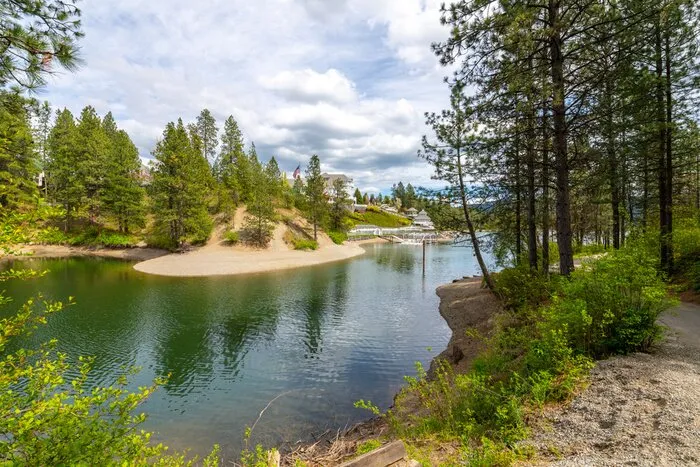
For families living around Black Bay, the park at the end of Bay Street has never really been just a park. Tucked behind neighborhoods at the 1200 block of East Third Avenue, Black Bay Park is named for the cove on its eastern edge and follows the Spokane River through trees and rock. Design firm Civitas calls it Post Falls' first park, dedicated back in the 1930s, and Landscape Architecture Magazine records that the land for the park was acquired by the city in 1946 as a result of delinquent taxes. From that quiet start, about 60 acres became a shared backyard for the surrounding streets.
What kept the park secret was the land itself. Its 60 acres are naturally split into distinct halves, separated by up to 300 feet of grade change. On one side is hard granite with very shallow soils, lichen, moss and conifers — a rugged wilderness piece. On the other are softer river soil beds left by glacial deposits, where the city eventually built the basketball and tennis courts and parking that many visitors mistook for the whole park. Granite outcroppings at the east-side entrance blocked the view beyond, so the forested acres and riverfront hid in plain sight, reached by rough, narrow trails and animal paths.
For neighbors, though, it was never hidden. Post Falls Parks Manager Bryan Myers, who grew up a few blocks away, called it simply, "This was my neighborhood park." Generations found the rope swing, the still water where mallards and Canada geese glide, the looped trail that ties into the North Idaho Centennial Trail, and the sandy beach at the bay. Civitas designer Jessica Doig described arriving the local way: you bushwhack through trees, shrubs and rock formations, and then you pop out at the river's edge with cliffs and a beach — a level of wilderness, in town, that felt like a secret.
That local love shaped what happened next. In 2019 the city tapped Civitas to create a vision for the park, not to remake it, but to make it more visible while keeping it wild. The team held its first public engagement during the city's Christmas tree lighting festivities inside City Hall, and followed with more meetings and interviews. What they heard was clear: protecting the park's natural features topped the community's list, along with a better arrival, basic amenities and safe water access. When designers presented alternatives from conservative to bold, Principal Scott Jordan recalled, the community chose the boldest scheme — boardwalks, floating community docks, looping trails for all mobility levels, a forest lounge, and riverbank restoration to slow erosion.
The vision began to turn real in October 2023, when Post Falls received a $750,000 Land and Water Conservation Fund grant for the first phase of improvements, after state approval nearly two years after federal approval. Parks and Recreation Director Dave Fair said the first phase would focus around the bay and lower area, redo worn paths and parking to Americans with Disabilities Act standards, and add an accessible boardwalk system at the water. With four phases planned in all, Black Bay's story is still being written by the people who live beside it — neighbors who first claimed a tax-acquired cove and who, decades later, insisted that opening it wider should never mean loving it less.
- Log in to post comments