
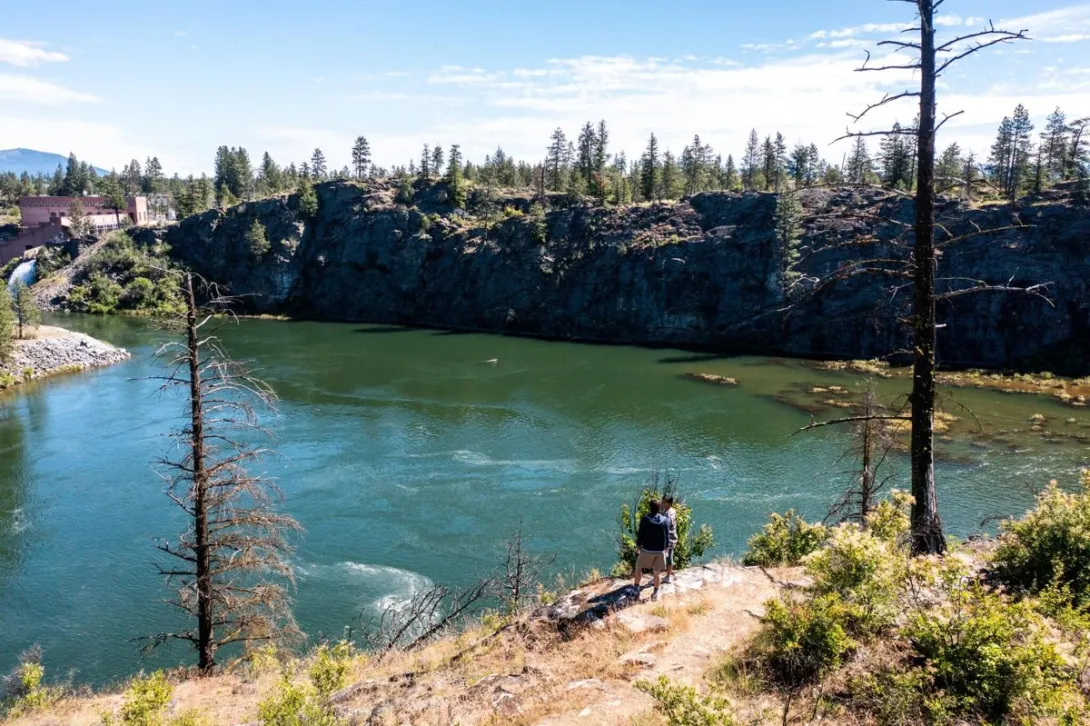
Most growing towns are measured in houses, roads, and rooftops, and Post Falls has added plenty of all three. Along the south side of the Spokane River, however, the city also spent nearly three decades growing something quieter. Piece by piece, parcel by parcel, Post Falls assembled a community forest along the river, working toward a 500-acre multi-use natural area with about two miles of Spokane River frontage, granite cliffs and rock outcroppings, native trees and shrubs, and room for wildlife close to home.
The first piece was in place early. Since 1987, the city's Parks Department has managed the 58-acre Q'emiln Trails parcel on the east side of the forest property. For many years that ground offered year-round public access for hiking, snowshoeing, wildlife viewing, rock climbing, and bouldering, reached through the trailhead in Q'emiln Park. It was a modest beginning, but it held a stretch of forested riverbank in public hands while the town around it kept growing.
The forest took its next step in 2005, when the city purchased the 76-acre Kroetch parcel. The purchase opened that land for public access for the first time, and the city left it undeveloped, as a natural piece of ground rather than a finished park. Added to the Q'emiln Trails, it showed a pattern in the city's growth: when a piece of the river hills became available, Post Falls was willing to buy it and simply keep it as forest.
The largest step came ten years later. In 2015, the city's Water Reclamation Division purchased 250 acres of forested property known as the Lost Mine parcel, set between the Q'emiln Trails and the Kroetch parcel and directly beside the Water Reclamation Facility's Spokane River outfall. Together, the Lost Mine property, the Q'emiln Trails, and the Kroetch property make up what the city calls the Upper Falls Community Forest. The land was planned for more than recreation, since the city envisioned reusing highly treated Class A reclaimed water there through drip irrigation and using the ground as an educational forest as well.
One more parcel would nearly complete the picture. In early 2016, the Water Reclamation Division and the Parks Department, working as a joint venture, applied for a $400,000 grant from the Forest Service to help purchase an additional 125-acre parcel known as the May parcel. The city held the right to exercise a purchase option on the land, although further funding from both departments would still have been necessary, and at the time of the city's account the May parcel remained private property and closed to public access.
Today the forest that did come together is open for non-motorized public recreation, entered through the trailhead in Q'emiln Park, with hiking and mountain biking trails winding through the trees above the river. For residents at Black Bay, it is part of the same river story that runs past their own shore: a growing city that chose, again and again over nearly thirty years, to let part of its growth take the form of forest that everyone could walk in.
- Log in to post comments